Fast shipping. Estimated delivery times may vary slightly during high demand.
Mix & Match & Save Sitewide!
2 Items = 5% Off, 3 or More = 10% Off
Discount applied automatically at checkout
Couldn't load pickup availability
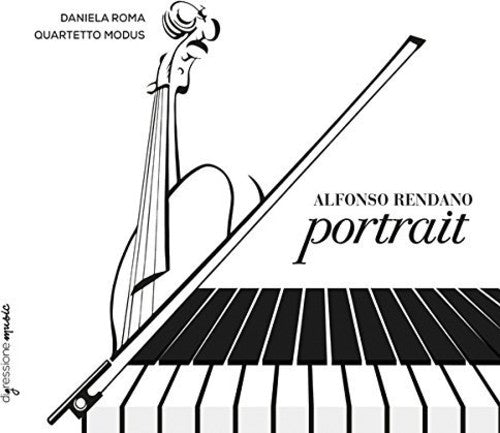
Alfonso Rendano was a pianist of a great stature. A lonely, curious, and stateless musician, never forgetting his roots. While struggling within he was capable of projecting himself with pioneering projects and exploits. At one point, he abandoned everything proudly, with stubborn silence, and prolonged absence from performance. This could be, at a glance, Rendano's profile: a somewhat neglected advocate of the mid-nineteenth-century Italian generation, which had the difficult task of shortening the distance between the "Country of melodrama" and the European classical-romantic culture. Rendano was born in 1853, in Carolei (located a few miles from Cosenza) and he died in Rome in 1931. He had shown his talent at a very early age. The pieces recorded on this album give us a double image of Rendano at his debut. He was able to grow as a composer by using different registers. The three waltzes dating back to the early 1870s, though distinct in their character, give us a view of the young pianist-composer as fully involved in the style of his time. He was part of the "Salonmusik", where all nineteenth-century pianists careers developed. Here they presented themselves with their own elegant, seductive, and more communicative compositions. The "Quintet in A minor" for piano and strings, together with the Piano and Orchestra Concerto, are the most demanding compositions of Rendano's youthful years. In fact, the two works were presented by the author as his "business card", in one of the most important moments of his career: his meeting with Liszt and the performances at the Grand Duke of Weimar in 1880.


![Don Williams - Epilogue: The Cellar Tapes [CD]](https://cdn.shopify.com/s/files/1/0278/7223/1499/files/418467313515_1000_250x250.webp?v=1775532931)


![Shinedown - EI8HT [CD]](https://cdn.shopify.com/s/files/1/0278/7223/1499/files/4495385-3537334_250x250.jpg?v=1771960145)


![Susumu Yokota - Will (Skintone Edition) [Reissue]](https://cdn.shopify.com/s/files/1/0278/7223/1499/files/4493700-3528086_250x250.jpg?v=1771274486)